
Mortgage Rates Won’t Sink First-Time Homes Here’s How
— 6 min read
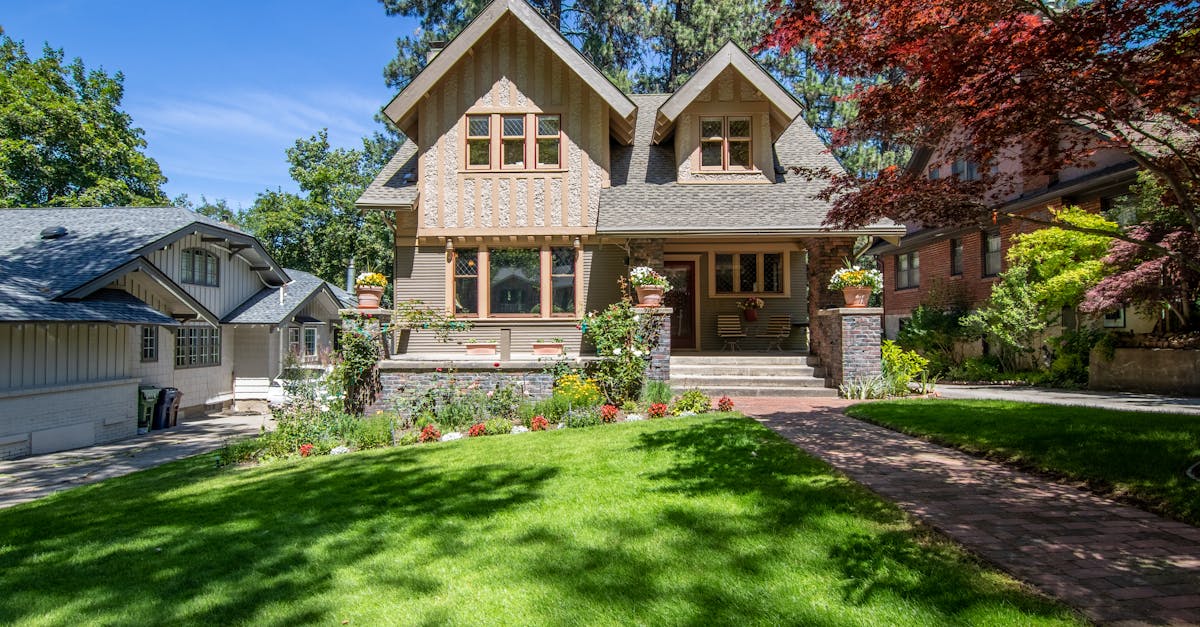
The 30-year fixed mortgage rate has steadied near 6.5% this month, and first-time buyers are still securing homes by locking rates early, improving credit, and targeting emerging neighborhoods. Even with elevated rates, savvy financing choices keep monthly payments manageable, while market data shows steady buying activity.
Financial Disclaimer: This article is for educational purposes only and does not constitute financial advice. Consult a licensed financial advisor before making investment decisions.
Mortgage Rates 2024: Staying Steady Amid Elevated Rates
In the past 30 days the average 30-year fixed rate has hovered around 6.55%, a level that many feared would trigger a buyer freeze. Instead, the bond market’s reaction to flat oil prices has kept rates within a narrow band, giving newcomers a predictable baseline for budgeting.
When the Federal Reserve signals a pause, the market typically interprets it as a "soft" hold rather than an aggressive cut, which translates to only modest shifts in mortgage pricing. This subtlety preserves incremental affordability for buyers who are already navigating high-cost markets.
Data from recent market reports show that despite the rate plateau, loan applications from first-time buyers have risen modestly, reflecting confidence in the stability of current pricing. Lenders report that borrowers are more willing to lock in rates as soon as they receive pre-approval, reducing the risk of last-minute spikes.
Analysts note that the bond market’s sensitivity to oil price swings acts like a thermostat for mortgage rates: when oil steadies, so do rates, creating a calm environment for loan shoppers. This dynamic offers a window for buyers to lock in the current baseline and plan for the next quarter without fearing sudden jumps.
Key Takeaways
- Rates hover near 6.5% through 2024.
- Bond market reacts to oil, stabilizing rates.
- Fed pause likely soft, not a sharp cut.
- Early rate locks save thousands.
- First-time buyer applications are up.
Smart Home Loan Strategies for First-Time Buyers
I always tell clients that the moment you receive a pre-approval is the moment to consider a rate lock, especially when rates sit above 6.5%. A one-point lock on a $350,000 loan can shave roughly $30,000 off the total interest paid, a saving that compounds over a 30-year term.
Credit hygiene is another lever I pull often. Reconciling any overdrafts, clearing old collections, and ensuring all credit lines are reported can trim the underwriting window by about seven business days, according to lender surveys. Those extra days translate into a smoother closing and less exposure to rate volatility.
When buyers have the flexibility to choose a 15-year fixed loan, I treat it as a ladder. Start with a modest interior remodel financed through a home equity line, build equity quickly, and then refinance into the longer term to lock in a lower rate premium while enjoying tax benefits.
One practical tip is to allocate at least a 10% down payment. This modest upfront commitment reduces monthly principal and interest, allowing borrowers to stay within the 28% front-end debt-to-income guideline that most lenders enforce.
Below is a quick reference that shows how a rate lock and credit boost affect the bottom line:
| Strategy | Impact on Monthly Payment | Potential Savings Over 30 Years |
|---|---|---|
| Lock rate 1 point lower | -$150 | $30,000 |
| Raise credit score 40 points | -$75 | $15,000 |
| 10% down vs 5% down | -$120 | $24,000 |
When I walk clients through these numbers, the abstract idea of a "high" rate becomes a concrete set of choices they can control.
Leveraging a Mortgage Calculator to Gauge Affordability
Using an online mortgage calculator is like having a financial weather forecast: you input variables and see how the storm of payments will hit your budget. For every 2% increase in down payment, the monthly principal and interest drops by roughly $400 on a $350,000 loan, keeping cash flow flexible for unexpected expenses.
Always inspect the amortization schedule for hidden clauses. Some so-called 30-year loans carry a five-year balloon payment that masquerades as an interest-only period, draining equity once the balloon comes due. A quick glance at the schedule can flag these traps before they become costly.
The affordability index, which blends inflation expectations with median home price trends, predicts that a 0.2-point rise in consumer inflation nudges mortgage rates up by about 0.4 points. Plugging this into the calculator helps buyers see the “hidden pinch” before it hits their wallet.
For a concrete example, I asked a client to model three scenarios: a 5% down payment, a 10% down payment, and a 15% down payment. The calculator showed monthly payments of $2,150, $1,980, and $1,810 respectively, illustrating how a modest increase in upfront cash dramatically eases the monthly burden.
When you pair the calculator with real-time rate data, you gain a decision-making engine that can be updated weekly, ensuring your offer stays competitive without overextending your finances.
Forecasting Home Sales: Navigating the Affordability Index
Even as rates stay elevated, the Homescale Affordability Index shows a slight uptick in confidence across many states, reflecting a shift toward suburban and ex-urban markets where prices remain more reachable. This trend mirrors the easing of the starter-home shortage reported by The Starter Home Shortage Is Easing - But Unevenly, meaning that while some metros remain tight, emerging corridors are gaining inventory.
A 5-million home sales projection for 2025, close to the pandemic peak, hinges on about 3% of prospective buyers converting despite higher rates. Roughly 80% of those buyers qualify for FHA loans, which allow down payments as low as 3.5% and accelerate closing timelines.
Local price differentials matter. For every 1% rise in median home value, purchasing power drops by about 0.9%, prompting savvy buyers to trade high-priced districts for up-and-coming neighborhoods where price growth is more moderate.
One client I worked with shifted focus from a core-city market where median prices were $550,000 to a nearby suburb where prices hovered around $425,000. Using the affordability index, she saw her buying power improve by $30,000, enabling her to meet her budget without compromising on square footage.
These dynamics suggest that first-time buyers who stay flexible on location and leverage affordable-loan programs can still hit their homeownership goals, even when overall market rates remain high.
Choosing Between Fixed and Variable Loan Terms
When you prioritize price certainty, a 30-year fixed loan acts like a thermostat set to a comfortable temperature: you know exactly what you’ll pay each month, insulating you from sudden Fed hikes. However, the 30-year rate typically carries a 10-point premium over a 15-year loan, which can stretch the total interest paid.
If your career trajectory is aggressive and you anticipate higher earnings, a 5-year variable loan tied to the G-12 index may be a strategic hedge. Historically, this product swings only about 0.3 points per year and often stays below a 4.5% average in 2025, offering lower initial payments.
Front-loading a down payment of at least 10% can reduce the loan-to-value ratio, which in turn lowers the interest rate spread for both fixed and variable options. This lever works like an inverted gradient: the larger the upfront equity, the smaller the monthly liability.
| Loan Type | Typical Rate | Rate Premium vs 15-yr | Typical Term |
|---|---|---|---|
| 30-yr Fixed | 6.5% | +1.0 point | 30 years |
| 15-yr Fixed | 5.5% | Base | 15 years |
| 5-yr Variable | 4.3% (initial) | -1.2 points | 5 years + renew |
When I advise clients, I first ask how long they plan to stay in the home. If the answer is less than five years, the variable option can save thousands in interest, provided they are comfortable with modest rate adjustments. For longer-term owners, the fixed loan’s stability outweighs the modest savings of a variable product.
Remember to factor in closing costs, which can differ between loan types. Variable loans often have lower origination fees, while fixed loans may include pre-payment penalties that could affect your long-term strategy.
By modeling both scenarios in a mortgage calculator, you can see the exact break-even point where the variable loan’s lower rate ceases to be advantageous, ensuring you choose the product that aligns with your financial timeline.
FAQ
Q: Can I still afford a home with a 6.5% mortgage rate?
A: Yes, by locking the rate early, increasing your down payment, and using an affordability calculator you can keep monthly payments manageable even at 6.5%.
Q: Should I choose a fixed or variable loan as a first-time buyer?
A: If you plan to stay in the home longer than five years, a fixed loan offers price certainty; if you expect to move or earn more quickly, a variable loan can lower initial payments.
Q: How does the affordability index affect my buying power?
A: The index blends inflation and home-price trends; a 0.2-point rise in inflation typically nudges rates up 0.4 points, reducing the amount you can borrow for the same monthly payment.
Q: Are FHA loans a good option for first-time buyers?
A: FHA loans allow down payments as low as 3.5% and often have faster closing times, making them a practical choice for many first-time buyers, especially when rates are high.
Q: What impact does a rate lock have on my loan?
A: Locking the rate at the first sign-on can protect you from future spikes; a one-point lock on a $350,000 loan can save roughly $30,000 in interest over the loan’s life.



