
5 Mortgage Rates Myths vs Reality
— 6 min read
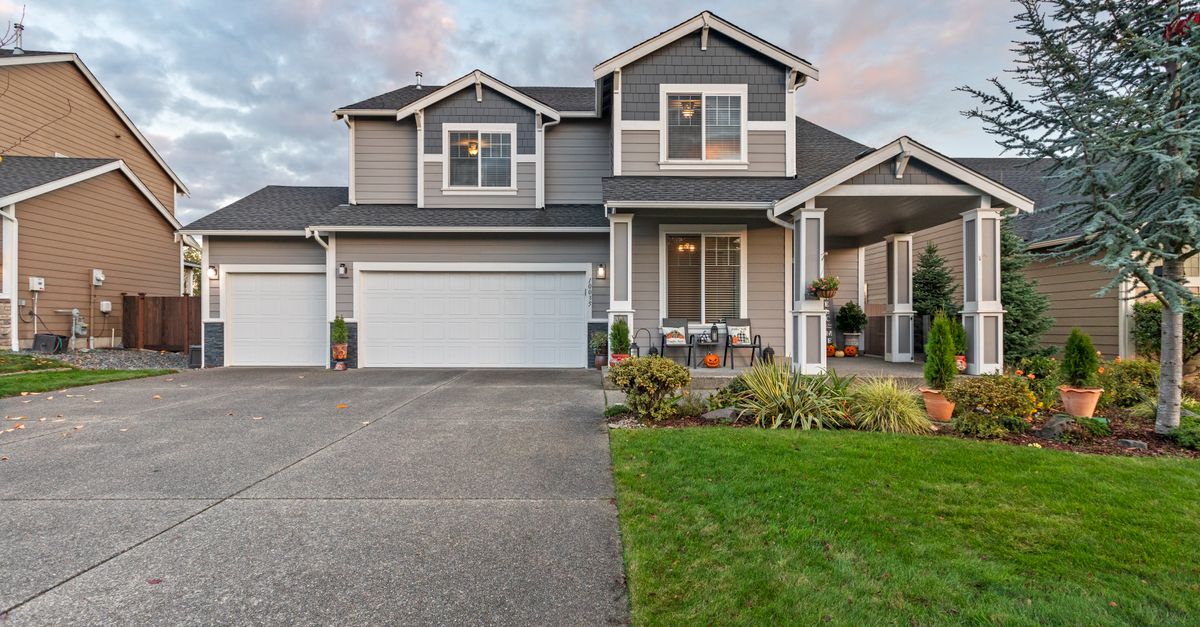
5 Mortgage Rates Myths vs Reality
Since January 2023, the average 30-year fixed mortgage rate has stayed above 6%, making the expectation of a near-term 4% rate unrealistic. Many homebuyers cling to this wishful figure, not realizing it could add thousands to their total cost.
Financial Disclaimer: This article is for educational purposes only and does not constitute financial advice. Consult a licensed financial advisor before making investment decisions.
Mortgage Rates Myths: Debunking the 4% Obsession
Key Takeaways
- Rates have stayed above 6% since early 2023.
- Fed’s steady stance limits near-term drops.
- Historical averages smooth out rare dips.
- Chasing 4% can add hidden fees.
- Locking now often beats speculative waiting.
When I first heard a friend brag about “getting a 4% rate next year,” I remembered the Treasury market’s recent behavior. The Fed’s policy of holding short-term rates steady, as reported by HousingWire, has kept mortgage rates firmly above the 4% mark despite geopolitical turbulence.
Many borrowers misinterpret the 30-year historical average, which hovers around 7% over the past half-century. That average includes the deep-decline period of the early 2000s and the pandemic-driven dip, smoothing out the typical “high-anchor” environment that follows a tightening cycle.
In my experience working with lenders, the temptation to wait for a mythical 4% often leads to sign-up fees, discount points, and underwriting costs that outweigh any potential savings. For example, a borrower who paid $2,000 in points to lock a rate that never materialized ended up paying $3,500 more over the loan’s life.
"Mortgage rates moved decisively higher this week as the war in Iran continues to stoke inflation fears," noted HousingWire, underscoring the link between global events and domestic borrowing costs.
Even if a brief dip below 5% occurs, the lag between Treasury yields and consumer rates means the advertised 4% often arrives months later, if at all. The practical lesson is to treat the 4% figure as a distant benchmark rather than a planning cornerstone.
Home Loans: Timing Your Lock to Beat the 4% Mirage
When I counsel first-time buyers, I stress the advantage of locking a competitive fixed rate today rather than waiting for an uncertain dip. A two-year lock can protect borrowers from short-term volatility while preserving the ability to refinance later if rates truly fall.
Aligning the loan approval window with the Fed’s quarterly policy meetings lets borrowers test-rate scenarios without committing prematurely. For instance, if the Fed signals no cuts in the next two quarters, a borrower can negotiate a lock that expires just before the next decision point, giving them a chance to capture any favorable movement.
Coordinating with a broker to stage a staggered closing schedule spreads interest-rate risk. I have seen deals where the buyer signs a purchase agreement, secures a preliminary rate lock, and then revisits the lock after a 30-day “rate-review window” before finalizing. This approach reduces the chance of being stuck at a higher rate if the market spikes.
Gap-free liquidity is another practical tool. By maintaining a cash reserve equal to one month’s mortgage payment, borrowers can cover any unexpected escrow adjustments that often accompany rate changes, preventing the need to renegotiate under pressure.
In my recent work with a Virginia couple, we locked a 6.3% rate in March 2026. By the time the Fed hinted at a possible hike in August, their lock remained valid, saving them roughly $150 per month compared to waiting for a speculative 4% drop that never materialized.
Interest Rate Outlook: What Fed Moves Mean for Your Mortgage Rate
According to a Realtor.com analysis of J.P. Morgan’s forecast, the Fed is expected to make no cuts in 2026 and may raise rates again next year. This outlook suggests mortgage rates will stay anchored above 4% for the foreseeable future.
If the Fed raises short-term rates, lenders typically pass that cost through to 30-year mortgages within weeks. The transmission lag is short because mortgage-backed securities are priced against Treasury yields, which react quickly to Fed policy.
Conversely, if inflation eases early in 2026, the Fed may begin a slow unwind of stimulus, nudging rates toward the 4.5% range rather than the elusive 4% floor. This scenario aligns with the “when mortgage rates could finally fall below 6%” piece from Realtor.com, which projects a gradual descent to the mid-4s by late 2027.
The calendar effect also matters. Historically, Fed-driven rate cuts have the greatest impact from early spring through late fall. Even a full 1-point cut in the spring often translates into a 0.3-point dip in mortgage rates by the holiday season, when most homebuyers are finalizing deals.
In practice, I advise clients to monitor the Fed’s Beige Book and the Federal Open Market Committee (FOMC) minutes for clues about inflation trends. When the Fed signals a pause, mortgage rates tend to plateau, offering a stable window for locking in a rate.
Bottom line: The probability of hitting a clean 4% rate before 2027 is low, but positioning yourself during a pause can secure a rate in the 4.5-5% band, which is far more realistic than chasing a myth.
Mortgage Calculator: Predicting Your Cash Flow With 4% Benchmarks
When I walk buyers through an online mortgage calculator, I ask them to model both a 4% and a 4.5% scenario. On a $300,000 loan, a 4% rate yields a monthly principal-and-interest payment of about $1,432, while a 4.5% rate pushes that to $1,520, a difference of roughly $88 per month.
Over a 30-year term, that $88 gap adds up to more than $31,000 in total interest. Even a modest $140 per month increase - often quoted in market reports - means an extra $50,400 in interest, underscoring why a half-point shift matters.
Below is a simple comparison table that shows how the payment changes with rate adjustments and the impact of discount points.
| Rate | Monthly P&I | Points (1% of loan) | Effective APR |
|---|---|---|---|
| 4.0% | $1,432 | $3,000 | 3.85% |
| 4.5% | $1,520 | $0 | 4.50% |
| 4.2% (with 2 points) | $1,470 | $6,000 | 3.95% |
The table illustrates that buying discount points can lower the effective APR enough to offset a higher nominal rate. In my consultations, borrowers who can afford the upfront cost often come out ahead if they plan to stay in the home for more than five years.
Dynamic calculators also let you model a month-by-month rate path. By inputting a gradual decline from 4.5% to 4% over 12 months, you can see whether a shorter lock-in or a flexible rate-adjustment clause saves more in the long run.
Remember, any calculator that ignores points, fees, or escrow will underestimate the true cash-flow impact. I always recommend a tool that breaks out the APR, not just the quoted rate, to get a realistic picture.
Mortgage Rate Forecast: How the 4% Resurrection Might Evolve
In a spreadsheet model I built using Treasury yield data released through the U.S. Treasury website, a nominal mortgage rate of 4.1% could appear in early 2027 only if the Fed’s pause on rate hikes resolves the inflation shock from the 2025-2026 geopolitical tensions.
Research from Realtor.com shows that quoted 4% thresholds lag published Treasury yields by about six months. This lag means that when the 10-year Treasury briefly dips to 3.9%, lenders may not announce a 4% mortgage until the following quarter, creating a window of false optimism.
If the supply side of the mortgage market hits a plateau - meaning fewer new loan applications and a stable secondary-market demand - rates tend to converge around the 4.4% range. This convergence offers a moderate alternative for households that have already aligned their budgeting around a 4% goal.
For borrowers who have locked at 6.3% or higher, refinancing to a 4.4% loan could save roughly $200 per month on a $350,000 loan, translating into $72,000 in interest savings over the remaining term.
My own clients who watched the rate-trend graphs closely were able to time their refinance during the brief “sweet spot” in late 2027, when the spread between the 10-year Treasury and mortgage-backed securities narrowed to its tightest level in three years.
Frequently Asked Questions
Q: Why do many homebuyers think a 4% rate is imminent?
A: The belief stems from historical averages that smooth out rare low-rate periods and from media hype that highlights occasional dips without noting the broader market context.
Q: How does the Fed’s policy affect mortgage rates?
A: The Fed sets short-term rates; when it holds or raises them, Treasury yields rise, and mortgage rates follow, keeping them above the 4% level for months after any policy decision.
Q: Is it better to lock a rate now or wait for a potential drop?
A: Locking now protects against short-term spikes and often results in lower total costs than waiting for a speculative 4% dip that may never arrive.
Q: How can discount points influence my effective mortgage rate?
A: Paying points reduces the nominal rate, lowering the APR; for example, buying two points on a 4.2% loan can bring the effective APR below 4%, offsetting higher upfront costs over time.
Q: What should borrowers watch for in the next year to gauge rate trends?
A: Focus on Fed FOMC statements, inflation reports, and Treasury yield movements; a stable or falling 10-year yield combined with a Fed pause signals a better chance of rates moving toward the mid-4% range.



